These two are now ready, with Audrey Hepburn and Jeanne d’Arc currently on the sculpting bench (Audrey blog to come tomorrow!).
I met with Alan on Thursday at Leeds Armoury and he brought them along to pass over in person, a real treat! Firstly, here they are with the gang! The Gang makes me so happy, imagine the adventures they could have together!
“Stagecoach” Mary Fields
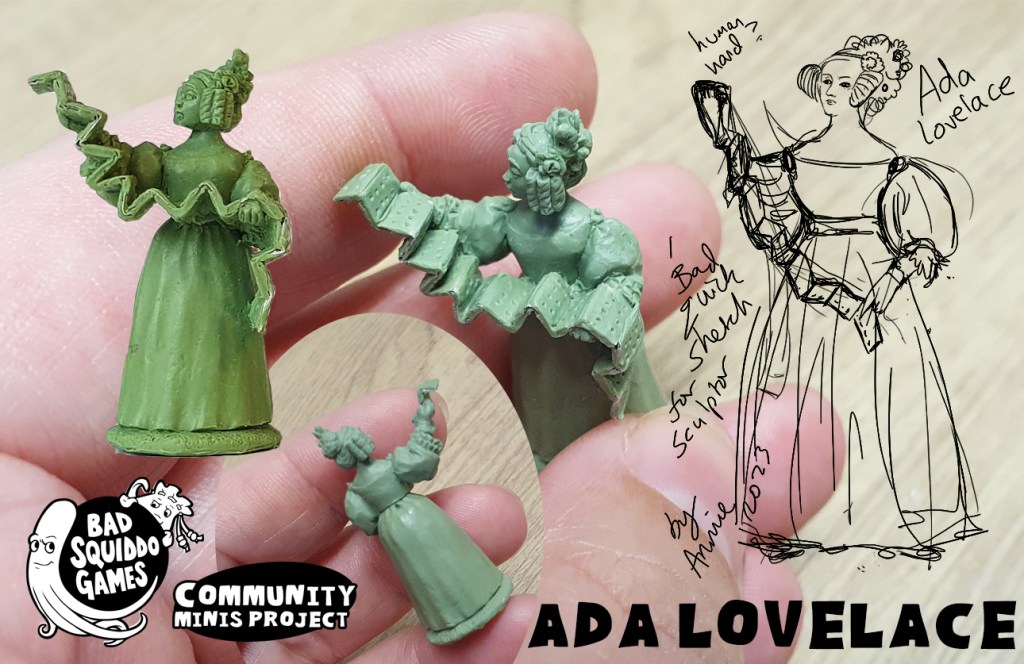
I’ve knocked up these little collages, and will try to for future minis! There’s very little change between sketch and sculpt. We made sure to get the right shotgun, whereas my scribble was generic, and changed Mary’s head angle slightly, but otherwise, we were right in sync. Even the tactical mound! I remain in awe of Mary and her achievements.
Ada Lovelace
I cannot WAIT to see this dress painted up in glorious purple fabric! Alan was really happy with my solution to drape the punch cards down the arm, so I am feeling like a nice smug minis designer now. Again, this needed barely any change, the cards going over the arm look better, and it’s altogether a beautiful mini and clearly recognisable as Ada.
Pre Order
You can pre order these now, the first 100 will get those lovely art cards
A sizeable chunk has already been allocated so don’t delay to ensure the lovely card! The art will be by Martin Whitmore and he’s got the task on his lap ready for the new year, then off to the printers next door to get them made up. Yay!
If you haven’t already read about my visit to see actual Ada Lovelace in person, then you should totally go and read that first.
As is now tradition with this project, I ended up way off track, spending a whole evening figuring out what the Analytical Engine WAS, and the purpose of punch cards. Some of you older folks (older, not old!) have helped to inform me on those, as it was a lost tech by my time!
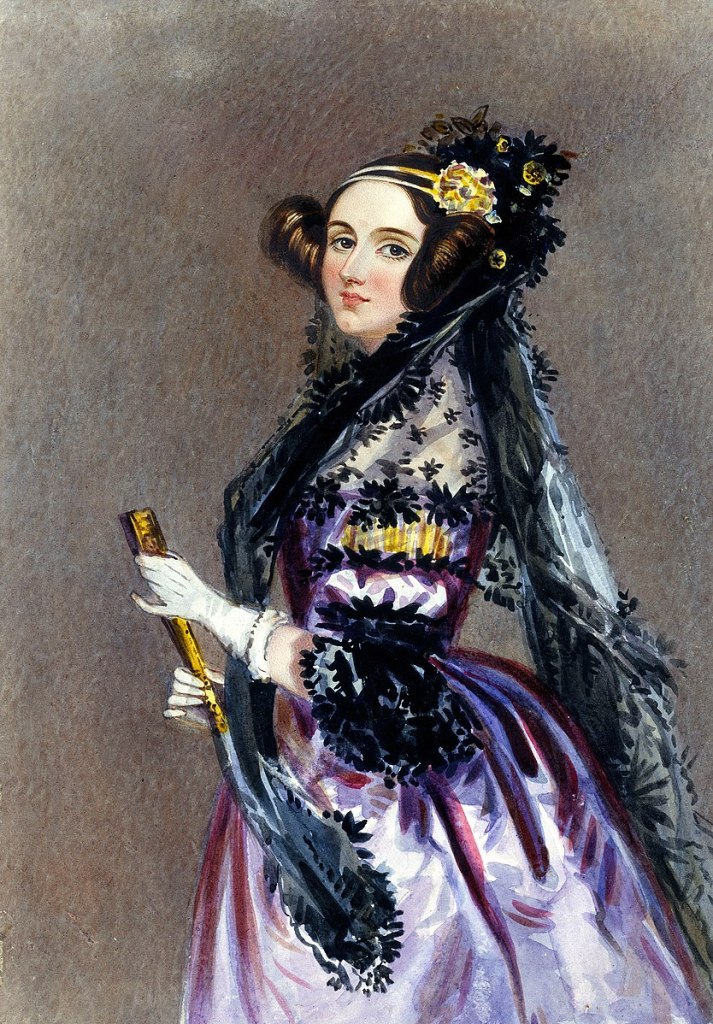
Ada Lovelace by Alfred Edward Chalon circa 1840
Ada Lovelace (born Augusta Ada King 1815 and died 1852) is a very well-known mathematician, recognised as being the very first computer programmer. She worked with Charles Babbage on his Analytical Engine, which was, in basic terms, a massive calculator slash early computer. It was theoretical, so they did not build it, but Ada’s annotations and calculations became the foundation for much of the technology we use today. We can blame her for those danged algorithms, she published the first one in 1840.
The daughter of “mad, bad and dangerous to know” Lord Byron, she was kept away from her father and the arts by her concerned mother Anne Isabella Milbanke, Lady Byron. Fearing the arts would corrupt her into the debauchery of her lineage, Ada was given a very scientific and mathematical upbringing by some of the best tutors available.
Designing the Figure
Ada Lovelace, sculpted by Etienne and Mary Millner. Located on the 7th floor of Millbank Quarter (formerly Ergon House), London.
From the start, I knew I wanted her to be wearing very fancy hair and dress as she was often portrayed wearing, most famously in the painting by Afred Edward Chalon. However, I don’t want her to be static.
Figuring out how to show someone “doing maths” can be quite the head-scratcher – which incidentally was a pose I pondered! But she was far more than any standard mathematician, and I wanted her to be more unique.
The “ah ha!” moment came with the punch cards from the Analytical Engine. Upon researching statues of Ada, I came to the conclusion that others had had the same idea and the same struggles! A fantastic piece by Etienne and Mary Millner, I can almost hear them going “argh just hang the punch cards up behind!”. I feel the struggle.
So let’s get to the Annie sketch. I feel she will work holding the cards up, perhaps quizzically, studying them. Regarding casting, they can almost cascade down her arm, something I am confident that the sculptor will figure out. They would need to be shorter at the very worst, but I think this is unlikely. I’ll get him to indent some holes into them, well – divots, so an ink wash will fill them in for you.
The veil in the painting will be harder to translate to a solid sculpt, as I have noticed from the more enormous public statues they have removed this, and we will too. It works beautifully in paint as it is translucent, but it would be quite a solid block in metal, especially at this scale.
I think this will make a lovely miniature to paint, and people can get really creative with the dress fabric, or if they are daunted, can paint it a solid colour with a wash and have it still look lovely.
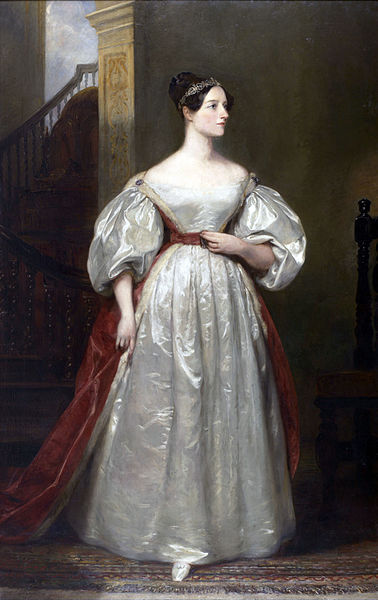
Ada by Margaret Sarah Carpenter circa 1836
Regarding the dress, there is another painting which shows her front on. It is a different dress to the purple, but I intend to converge the design to make something which works well. Splay the bottom of the sleeves and add those delicate gloves.
That’s all there is really for the design of Ada Lovelace. Anything else to note? Oh, the weird hand in the sketch! I am very tired and figured I could wind myself up trying to figure out the hand for the rest of the evening, or just tell the sculptor what I meant, and he’ll do it fantastically! Wahey! That’s the process, folks!
I am very much looking forward to seeing a lady in a massive fancy Victorian dress figuring out complex maths thingies. Yes! Are you?
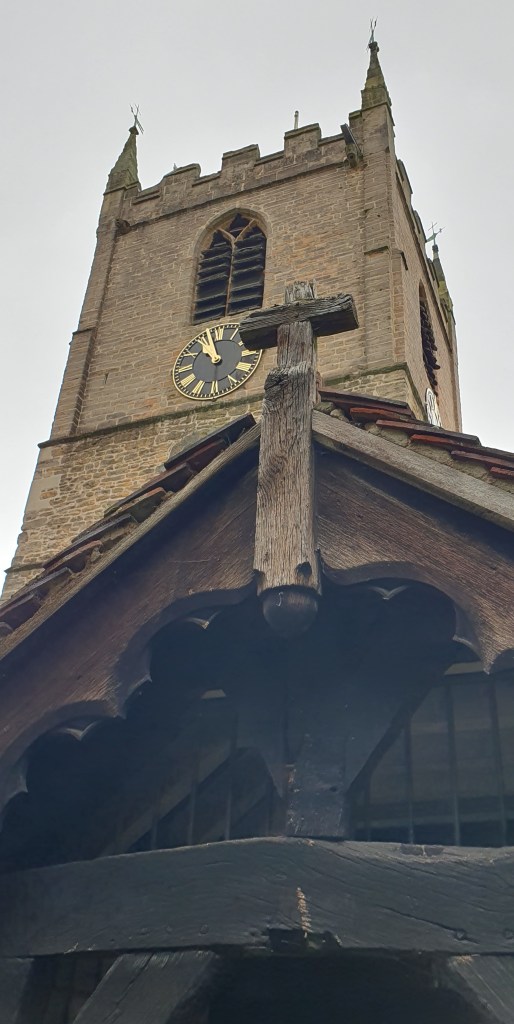
Magnifique! Church of St Mary Magdalene, photo by Annie Norman
A while back (though I dare not look at the date, I feel it was a few weeks ago, but it was more likely into the months), I decided to visit Ada Lovelace. It would have been rude not to!
“But Annie, didn’t Ada die in 1852?” I hear you cry. She did indeed, but her remains….remain. So I went to say hi.
She is buried in the Byron family vault in Hucknall, along with her father, Lord Byron, and family members going back 200 years. Hucknall is super easy to reach from Nottingham, where Bad Squiddo Games is based, so one very straightforward tram journey later, we were walking up to the Church of St Mary Magdalene. It really is history on your doorstep!
The church dates back to the 12th century, with it being expanded over the years, notably significantly in the 19th Century. The Norman element is very clear on entry and was my favourite part of the building (don’t tell Ada). Who doesn’t love old wood and big stone blocks?
Ada Lovelace – 1843 or 1850 a rare daguerreotype by Antoine Claudet.
Upon entry, we were greeted by a lovely chap whose name escapes me – I shall get it on my next visit and write it down! I’m going to call him George for now. It might have been George. He welcomed us in and gave us a tour of the church, which really was fascinating. I had no idea there had been so much history here all along, and the church has many ties to Newstead Abbey, somewhere else I have yet to visit – though that will be fixed soon! I just about resisted signing up for their volunteer gardener program… this time.
While fascinating, I’ll refrain from going too much into the details of the church as a whole, as this is about Ada Lovelace, remember, but it was superb, with lots of original Norman fixtures and fittings, including a big lead font.
With Indiana Jones fresh in my mind, I think part of me thought we would go down some steps into the vault itself, but of course not. ABOVE the vault, in the sanctuary of the church (I think that is the term, behind where the vicar stands) is where you can access. I asked George if he’d take me down the vault if I slipped him a fiver, but he informed me it was last opened in 1938. I’ll try again on the next visit, though, I might have put the idea in his mind. Maybe a fiver and a cup of tea this time?
A bad scribble showing roughly where the vault is, scribbles and photo by Annie NormanInside the Vault in 1938, Ada is in the centre there.The Proper plans of the Byron Vault
Here, I have attempted to show roughly where the vault lies in relation to the church and where you can get to. So you’re really standing on top of it all. Above are various memorials to Ada and her father, some very recent (he was big in Greece!)
It’s a weird feeling being so close to somebody you have been researching, even though she is long gone ( though apparently, in 1938, Byron was still very well preserved, even the erm…member). A feeling of, is this cool, Ada? I had a quiet word and told her it would be very cool and lots more people would hear her story.
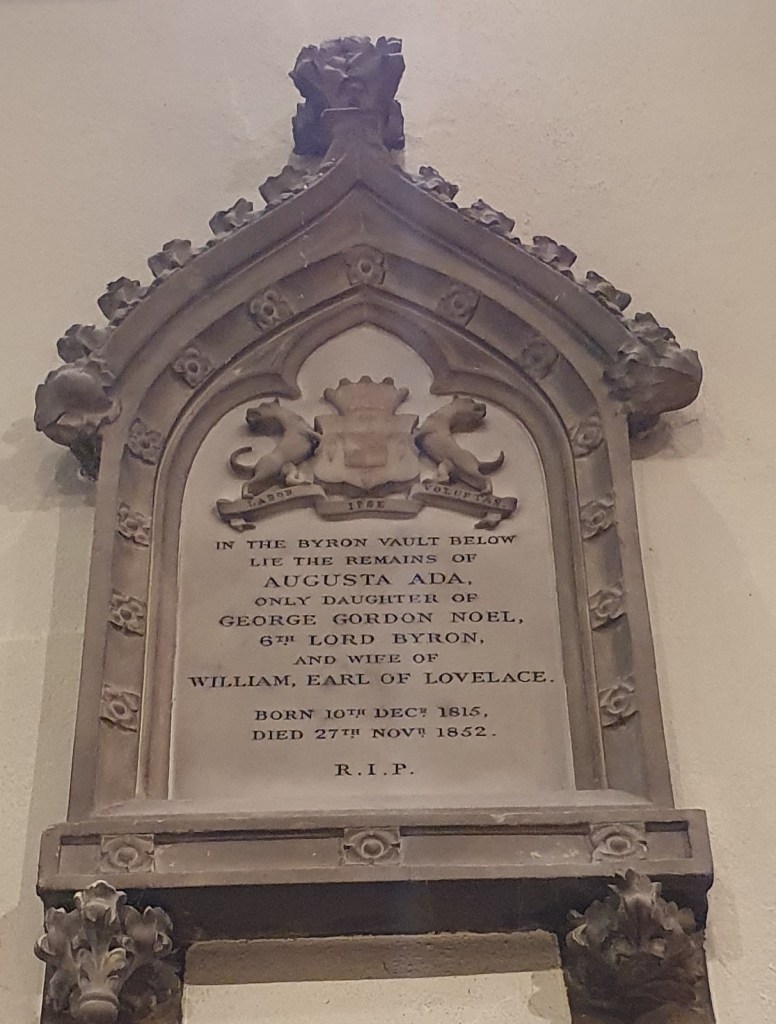
Memorial plaque to Ada Lovelace, photo by Annie Norman
George kindly offered us some tea and cake, and I know to never down church cake, for it’s always especially good. This gave us a chance to chat with some of the ladies who volunteered there and had some enlightening chats about Byron and Ada, as well as the history of the church. I told them about the project and that I would return, tiny Ada Lovelace in hand, to show them all. I hope to get an extra one painted too so I can give it to them as a neat little present. It will be the ultimate test of whether we’ve got the mini right, as these people spend a lot of time around her, they’re basically family at this point!
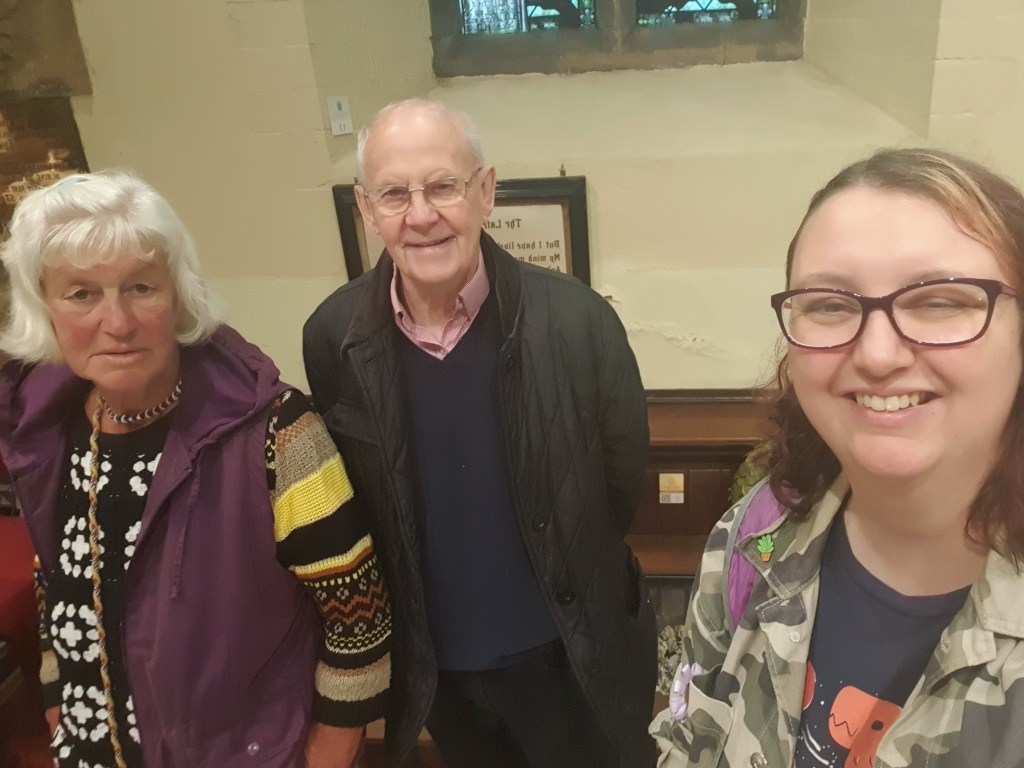
L-R Lil, George and Annie (me!) Erm, standing on Ada Lovelace.
Who is the “we” I refer to throughout this? My mum, Lil! Yay, Lil! Here we all are in the church; I will make sure to get George’s actual name next time, but he was a brilliant host, full of information and a great sense of humour.
While on the face of it, the visit is not imperative to the figure design, it is for my sense of completion and research, as I like to get out where I can and not just be in books, and hey – it’s an excuse to visit somewhere new! I feel like I have more of a connection to Ada now, and I am looking forward to returning and seeing the lovely people again. It just feels more… rounded, you know? History is out there, in the streets! Or under the floor!
Next up is the design concept for the Ada Lovelace miniature, I’ll save it for the next entry. What do you think of this trip, are you tempted?







 Community Miniatures Project